Rust, how a 40,000-hour trio turns a 500-pop wipe into a server takeover
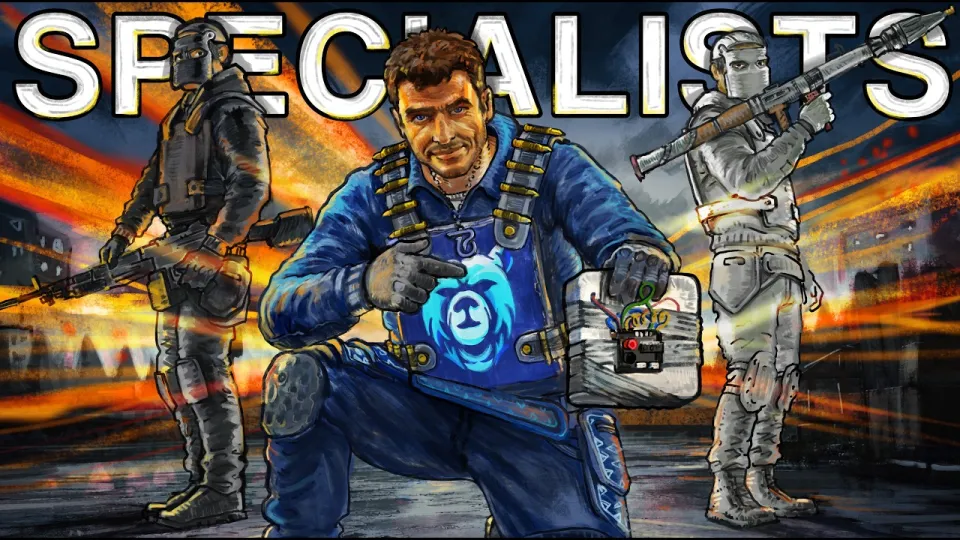
Video: How a 40,000-Hour Trio CONTROLS a SERVER - Rust
You can order the same kind of articles for your own video to boost it on YouTube and Google. Just message the Telegram bot @sat_sit_bot. Articles with your video embedded are written and posted by the bot itself — on popular topical sites (no ads). Try it free: 50 articles on us.
· based on the channel Blooprint
Key takeaways
- Blooprint, Disfigure and Nine bring roughly 40,000 combined hours of Rust experience into one trio.
- The wipe runs on a server with 500+ concurrent players, where competition for monuments and raids is constant.
- The trio's edge is speed: fast early progression, shared blueprints and coordinated roams instead of solo grinding.
- Raiding every competitor turns loot into momentum — each successful online raid funds the next one.
- Gear fear is the dividing line: the trio roams with top-tier kits like the M2 and L9 while most players hoard them.
Rust is a survival game where a small, experienced group can control an entire server by combining faster early progression with constant raiding, and the trio of Blooprint, Disfigure and Nine is the clearest example — roughly 40,000 combined hours against a 500+ pop wipe. Their control does not come from one big fight; it comes from turning every won fight into materials, every raid into a bigger base, and every hour online into pressure other players cannot match. You can watch the full run on Blooprint's Twitch channel, where the trio's sessions and raids are streamed live.
What 40,000 hours actually buys a Rust trio
Experience in Rust is not about aim alone — it is about knowing exactly what to do in the first hours of a wipe and never wasting a trip. A trio with tens of thousands of hours between them skips the experimentation phase: they know which monuments to contest, which components matter early, and how to split tasks so one player farms, one builds and one scouts. That division of labor is what separates a group that reaches tier-two weapons on day one from a server full of players still looking for a workbench.
The number itself matters less than the consistency behind it. Forty thousand hours means thousands of wipes, thousands of fights lost and won, and a shared vocabulary inside the team — callouts, rotations, who takes the rocket launcher, who holds the angle. On a 500+ pop server, that coordination is the difference between a base that survives the first night and a base that becomes a raid target.
Early wipe: how the trio gets ahead before anyone notices
The opening hours of a fresh wipe decide who controls the map for the rest of the month. A high-hour trio typically follows a repeatable pattern:
- Split spawns to cover more ground and secure a starter near a monument with good loot density.
- Rush a workbench and basic guns before building anything expensive — a small, cheap base is safer than a big obvious one.
- Farm components for explosives early, because sulfur and gunpowder set the pace of the entire wipe.
- Scout neighboring bases and note who is online, who is quiet and who is worth raiding later.
- Consolidate into a main base only once the team has enough gear to defend it.
The description of the run is blunt about the outcome: the wipe started without major ambitions and the trio ended up dominating the server within a short time. That is the typical curve for experienced groups — a quiet start, a fast snowball, and then a map where every other clan is reacting instead of setting the tempo.
Raiding as an economy, not a highlight
Most players treat a raid as a one-off event; a controlling trio treats it as an investment. Every base they break open returns sulfur, explosives, guns and, more importantly, removes a competitor from the map. On a 500+ pop server the loot from a single well-chosen raid can fund two more, which is how a group goes from strong to dominant without ever farming for hours on end.
Choosing targets is where the hours show. Bad raids are expensive: a failed online raid burns rockets, exposes your base and hands the defenders free loot. Experienced players pick bases by looking at activity, base size and likely loot rooms, and they raid when the defenders are offline or split — or, in the opposite case, deliberately online to break a rival's morale. The trio in this run raids the competition continuously, which keeps enemy groups rebuilding instead of progressing.
Defending against online raids and the gear-fear problem
Control is not only about attacking; it is about surviving the night when someone decides to hit you back. Online defense in Rust is a skill of its own: knowing where to hold, when to push out, how to use turrets and traps, and how to keep a backup kit ready. A trio that has defended hundreds of times reacts faster than a clan of ten that has never been tested.
Viewers often point out the same contrast: many players never take their best weapons out of the base, while the trio roams with top-tier kits. That is the gear-fear gap. Holding an M2 or an L9 in a box protects nothing — it just means the enemy has better guns when they finally break in. The groups that control servers are the ones that use their best gear while it still matters, accept the risk of losing it, and treat a lost kit as a cost of doing business rather than a disaster.
Questions Rust players ask about server control
Watching a trio dominate raises the same doubts every wipe, and most of them have practical answers.
- "How can three players beat bigger clans?" Numbers matter, but coordination and gear quality matter more. Three players who rotate together and share loot beat a disorganized group of eight almost every time.
- "Is it just about hours played?" Hours build knowledge, not aim. The real advantage is knowing what to farm, when to raid and when to log off — decisions that cost nothing and save everything.
- "Why raid everyone instead of farming quietly?" Because loot from raids compounds. A quiet base grows linearly; a raiding trio grows with every enemy it removes from the map.
- "What about suspiciously good players?" Some fights look impossible, and skepticism is healthy — but on high-pop servers, a player who has defended the same base layout a thousand times simply reacts faster.
Useful links
- Live streams: https://www.twitch.tv/blooprint
- Kick: https://kick.com/blooprint
- TikTok: https://www.tiktok.com/@blooprintgames
- Twitter: https://twitter.com/blooprintgames
- Discord: https://discord.gg/blooprint
Bottom line
A 40,000-hour trio controls a Rust server by compressing the whole wipe into a repeatable routine: fast early progression, shared blueprints, raids that pay for themselves and defenses that hold when someone hits back. The Blooprint, Disfigure and Nine run on a 500+ pop server shows that dominance is less about individual aim and more about tempo — the group that sets it forces everyone else to react. If you want to see that tempo live, follow the action on Blooprint's Twitch channel and watch the next wipe from the first minute. The Blooprint channel is the author of this breakdown and the source of the run described here.
Questions & answers
How do three players control a 500+ pop Rust server?
By moving faster than everyone else: efficient early progression, shared blueprints and constant raiding. Each won fight and each raided base returns gear and sulfur that fund the next raid, so the trio snowballs while larger clans are still organizing. Coordination inside a small team also beats numbers in most fights.
Is 40,000 hours really the reason the trio wins?
Hours mostly buy knowledge, not aim. Tens of thousands of hours mean the team knows exactly which monuments to contest, what to farm first and when a raid is worth the cost. That decision-making saves resources and time, which matters more on a crowded server than raw mechanical skill.
Why do so many Rust players keep their best guns in the base?
Gear fear. Losing an M2 or an L9 feels like a huge setback, so players hoard them and never use them. The problem is that hoarded gear does nothing until someone breaks in and takes it — groups that control servers use top-tier kits while they still give an advantage and treat losing one as a normal cost.
What makes an online raid different from an offline one?
An online raid forces defenders to fight back, which means the attackers can lose rockets, kits and time if they misplay. It also breaks the defenders' morale and progress far more than an offline raid. Experienced groups choose targets carefully and raid online when they want to remove a rival from the map for good.
Source: How a 40,000-Hour Trio CONTROLS a SERVER - Rust · Markdown version